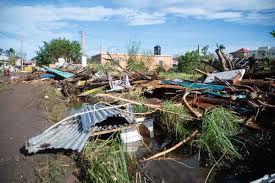
On 28 October 2025, the island of Jamaica was struck by one of the most powerful hurricanes ever recorded in the Atlantic region. Hurricane Melissa made landfall near New Hope in the parish of Westmoreland with sustained winds reaching the threshold of a Category 5 storm and caused catastrophic damage across the island. The event has already been labelled the “storm of the century” for Jamaica. :contentReference[oaicite:2]{index=2}
The Unprecedented Assault
According to meteorological authorities, Hurricane Melissa made landfall with winds of around 185 mph (295 kph), which surpasses many historic hurricanes that have hit Jamaica. :contentReference[oaicite:3]{index=3} The parish of St. Elizabeth, among the worst-hit regions, was described as being “underwater” in the immediate aftermath of the storm’s passage. :contentReference[oaicite:4]{index=4} Widespread power outages were reported—more than half a million customers were left without electricity as the storm crossed the island. :contentReference[oaicite:5]{index=5}
Why This Storm Was So Severe
Several factors contributed to the devastating power of Hurricane Melissa. First, the storm rapidly intensified as it approached Jamaica, a phenomenon increasingly seen in tropical cyclones over warm waters. Scientists note that warming sea surface temperatures in the Caribbean may be behind the trend of stronger storms. :contentReference[oaicite:6]{index=6} Second, the slow movement of the storm over the island prolonged exposure to destructive winds and rains—meaning more time for damage to accumulate. Third, much of Jamaica’s infrastructure, especially in rural and coastal communities, was vulnerable to high winds, storm surge and flooding.
The Human and Economic Toll
Although final figures are still being compiled, the early reports were grim. At least three people died in Jamaica as a direct result of the storm, with many more injured. :contentReference[oaicite:7]{index=7} Roads and bridges were rendered impassable by landslides and flooding; homes and commercial buildings created in earlier decades were overwhelmed by the strength of the hurricane. Many livelihoods—especially in agriculture and tourism—were severely disrupted. Business owners in places like the coastal region of Treasure Beach reported knee-deep floodwaters in their rental properties and large losses of income. :contentReference[oaicite:8]{index=8}
Critical Sectors Hit Hard
Agriculture, one of Jamaica’s main industries, was hit especially hard. Crops, trees and farm infrastructure suffered massive losses as strong winds ripped through plantations and heavy rainfall triggered landslides. Coastal tourism infrastructure—hotels, guest houses, rental cabins—also bore the brunt of the storm’s fury. In particular, property owners described floodwaters encroaching into guest accommodations and cancellations of bookings for months to come. The ripple effect on the economy is considerable.
Immediate Response and Recovery Efforts
The Jamaican government declared a national emergency and activated shelters across the island. Officials emphasised the need for evacuation in low-lying and flood-prone areas, although some residents were reluctant to leave their homes. :contentReference[oaicite:9]{index=9} International aid agencies and regional partners mobilised to assist with food, shelter, medical assistance and restoration of power and communications. However, the magnitude of the damage means that long-term recovery will require months if not years of rebuilding and resilience-building work.
Long-Term Challenges for Jamaica
Rebuilding after a storm of this magnitude brings many challenges. Infrastructure must not only be repaired but also strengthened to withstand future events. There is a growing recognition that climate change is not merely a theoretical concept for Jamaica, but a very real factor in the increasing intensity of storms. Researchers point out that Jamaica lies in a zone of high hurricane risk—especially from August through mid-September and again in late October. :contentReference[oaicite:10]{index=10} Government and private-sector planners face the task of incorporating resilience into urban planning, agriculture, tourism and coastal management.
Lessons for Other Caribbean Nations
The impact of Hurricane Melissa in Jamaica serves as a stark warning to other Caribbean nations. The frequency and intensity of hurricanes are increasing, and preparedness must evolve accordingly. Lessons include: strengthening building codes, improving early-warning systems and evacuation procedures, investing in resilient agriculture, and safeguarding tourism infrastructure. Climate adaptation is no longer optional—it is essential.
What the People of Jamaica Are Saying
On the ground, many Jamaicans expressed a mixture of shock and determination. Long-time residents compared the storm to historic events like Hurricane Gilbert in 1988, which devastated large parts of the island. :contentReference[oaicite:12]{index=12} But for many, Melissa exceeded even those benchmarks. Community-level action has already begun—neighbours helping neighbours, local charities organising shelter supplies, and discussions starting about how to rebuild smarter.
The Road Ahead: Resilience and Hope
Although the destruction wrought by Hurricane Melissa is immense, Jamaica’s story is far from over. With the international community stepping in, and local commitment strong, there is hope that the island will rebuild more resiliently than before. For Jamaica, this event may mark a turning point: not simply returning to the status-quo ante, but transforming into a model of climate-resilient development in the Caribbean.
Conclusion
Hurricane Melissa has left a lasting mark on Jamaica—its people, its land and its future. The storm exposed vulnerabilities, but also catalysed conversations about adaptation, preparedness and sustainable recovery. As Jamaica moves forward, the lessons learned here will matter not just for one island, but for many nations facing the rising challenge of extreme weather in a warming world.