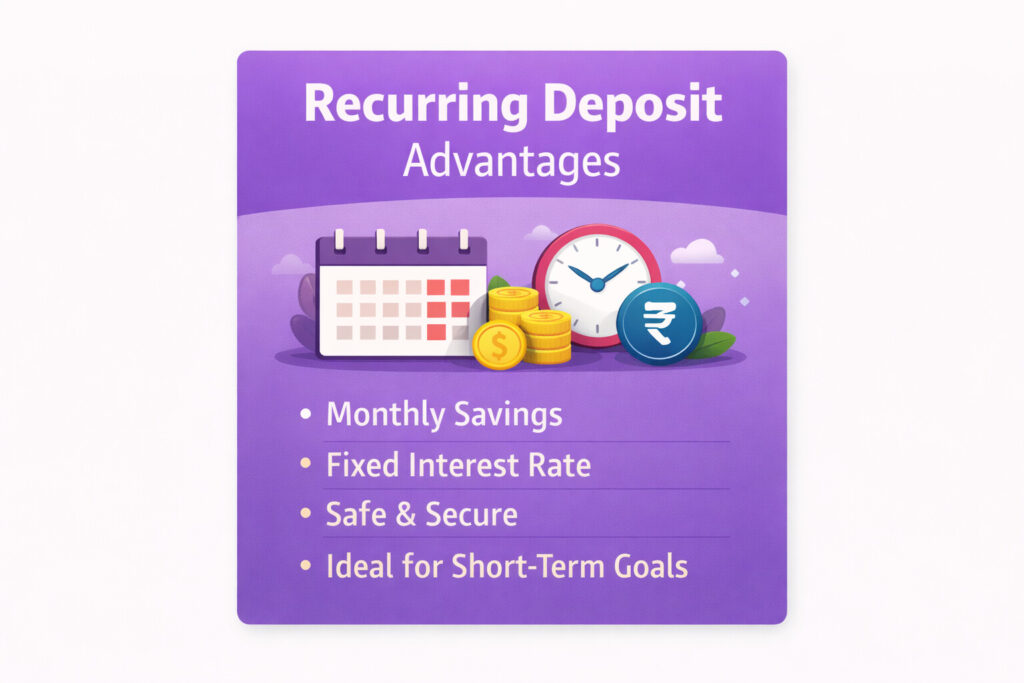
Recurring Deposit (RD) उन लोगों के लिए एक बेहतरीन savings tool है जो हर महीने थोड़ी-थोड़ी रकम जमा करके future के लिए पैसा बनाना चाहते हैं। Students, salaried employees, housewives और beginners के बीच RD बहुत popular है क्योंकि इसमें discipline के साथ guaranteed return मिलता है और market risk नहीं होता।
इस article में हम detail में जानेंगे:
RD क्या होता है
RD interest rates in India
RD के benefits और limitations
RD calculator और returns
RD से जुड़ी tax rules
RD किसके लिए best है
has-alpha-channel-opacity"/>
What is a Recurring Deposit (RD)?
Recurring Deposit एक ऐसा deposit account होता है जिसमें:
आप हर महीने एक fixed amount bank में जमा करते हैं
एक fixed tenure (जैसे 6 महीने, 1 साल, 3 साल) के लिए
Bank उस पर fixed interest rate देता है
Maturity पर आपको total जमा राशि + interest मिलता है
👉 RD उन लोगों के लिए ideal है जो lump sum FD नहीं कर सकते, लेकिन monthly saving कर सकते हैं।
Types of Recurring Deposits in India
1️⃣ Regular RD
General investors के लिए
Monthly installment mandatory
Most common RD type
2️⃣ Senior Citizen RD
60+ age वालों के लिए
Normal RD से extra interest (0.25% – 0.75%)
3️⃣ RD for Minors
Parents/guardians बच्चों के नाम RD open कर सकते हैं
Education और future goals के लिए useful
4️⃣ Flexible RD (Some Banks)
Monthly amount flexible
Mostly private banks offer करते हैं
RD Interest Rates in India (2026 – Approx)
🔹 Public Sector Banks
SBI RD – 6.5% – 7.1%
PNB RD – 6.5% – 7.25%
Bank of Baroda RD – 6.5% – 7.25%
🔹 Private Sector Banks
HDFC Bank RD – 6.75% – 7.25%
ICICI Bank RD – 6.7% – 7.2%
Axis Bank RD – 6.75% – 7.3%
🔹 Small Finance Banks (Higher RD Interest)
AU Small Finance Bank – up to 8.0%
Ujjivan Small Finance Bank – up to 8.25%
Equitas Small Finance Bank – up to 8.0%
⚠️ Note: RD interest rates change from time to time. Always check the official bank website.
RD Tenure Options
Banks अलग-अलग tenure options देते हैं:
6 months
9 months
1 year
2 years
3 years
5 years
👉 Longer tenure = generally higher interest.
Recurring Deposit Calculator – How RD Returns are Calculated
RD calculator आपको यह estimate करने में मदद करता है कि:
हर महीने कितना
जमा करेंगे
Total tenure कितना होगा
Maturity पर कितना पैसा मिलेगा
📌 RD Interest Formula (Simplified)
Maturity Amount = Monthly Deposit × Number of Months + Interest
Banks compound interest quarterly.
👉 (यहाँ आप अपना RD Calculator embed कर सकते हैं)
Benefits of Recurring Deposit
✅ Disciplined Saving Habit
RD monthly saving की आदत डालता है।
✅ Guaranteed Returns
Market fluctuation का कोई risk नहीं।
✅ Affordable Investment
₹500 या ₹1000 से भी RD शुरू की जा सकती है।
✅ Safe Investment
Banks RBI regulated होते हैं।
✅ Flexible Tenure
Short-term और medium-term goals के लिए perfect।
Limitations of RD
⚠️ Fixed Monthly Commitment
हर महीने installment देना जरूरी होता है।
⚠️ Lower Returns
Mutual funds या equity से returns कम होते हैं।
⚠️ Premature Penalty
RD बीच में बंद करने पर penalty लग सकती है।
RD vs Fixed Deposit (FD)
Feature
RD
FD
Investment Style
Monthly
Lump Sum
Returns
Moderate
Slightly Higher
Discipline
High
Medium
Liquidity
Limited
Limited
👉 Monthly saving → RD 👉 Lump sum investment → FD
RD vs SIP
Feature
RD
SIP
Risk
Very Low
Market Risk
Returns
Fixed
Market-linked
Suitable For
Conservative
Long-term wealth
👉 Safety priority → RD 👉 Higher growth goal → SIP
Tax on Recurring Deposit
RD interest taxable होता है।
💰 Tax Rules
RD interest आपकी total income में जुड़ता है
TDS @10% if interest exceeds ₹40,000
Senior citizens limit: ₹50,000
👉 RD पर 80C tax benefit नहीं मिलता।
Premature Withdrawal Rules
अगर आप RD maturity से पहले बंद करते हैं:
Interest rate कम हो सकता है
0.5% – 1% penalty लग सकती है
कुछ banks partial withdrawal allow नहीं करते
Who Should Invest in RD?
RD ideal है:
Students
Salaried employees
Housewives
First-time investors
Short-term goals (vacation, gadgets, fees)
Common Mistakes to Avoid
❌ Monthly installment miss करना ❌ Higher interest के चक्कर में unknown banks ❌ Tax impact ignore करना ❌ Emergency fund RD में lock करना
FAQs – Recurring Deposit
Q1. What is the minimum RD amount?
Most banks allow RD starting from ₹500 per month.
class="wp-block-heading">Q2. Can I miss an RD installment?
Some banks allow, but penalty may apply.
Q3. Is RD better than FD?
RD monthly savers के लिए better है, FD lump sum वालों के लिए।
Q4. Is RD safe in India?
Yes, banks RBI regulated होते हैं और deposits insured हैं।
Internal Links (SEO Important)
👉 Banking in India – Complete Guide (Pillar Page)
👉 Fixed Deposit Interest Rates in India
👉 Best Savings Account in India
Disclaimer
This article is for informational purposes only. RD interest rates, penalties, and rules may change. Please verify details on the official bank website before investing.